Laser Tattoo Removal in Mae Sot with the PicoSure Picosecond Laser
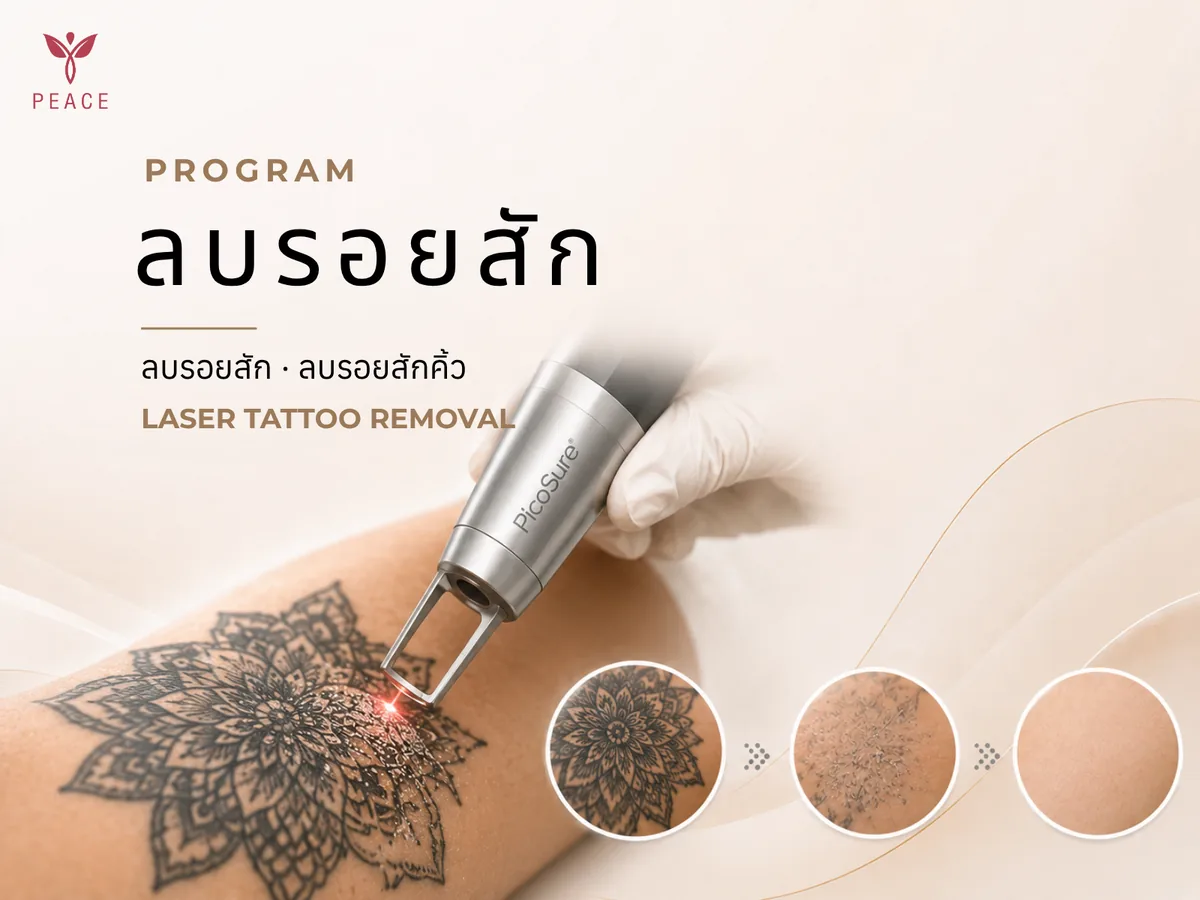
Remove body tattoos, regretted tattoos and cosmetic tattoos (brows, lips, eyeliner) with the US FDA-cleared PicoSure picosecond laser — shattering ink so it fades session by session while sparing the surrounding skin. Physician-performed at Peace Clinic Mae Sot.
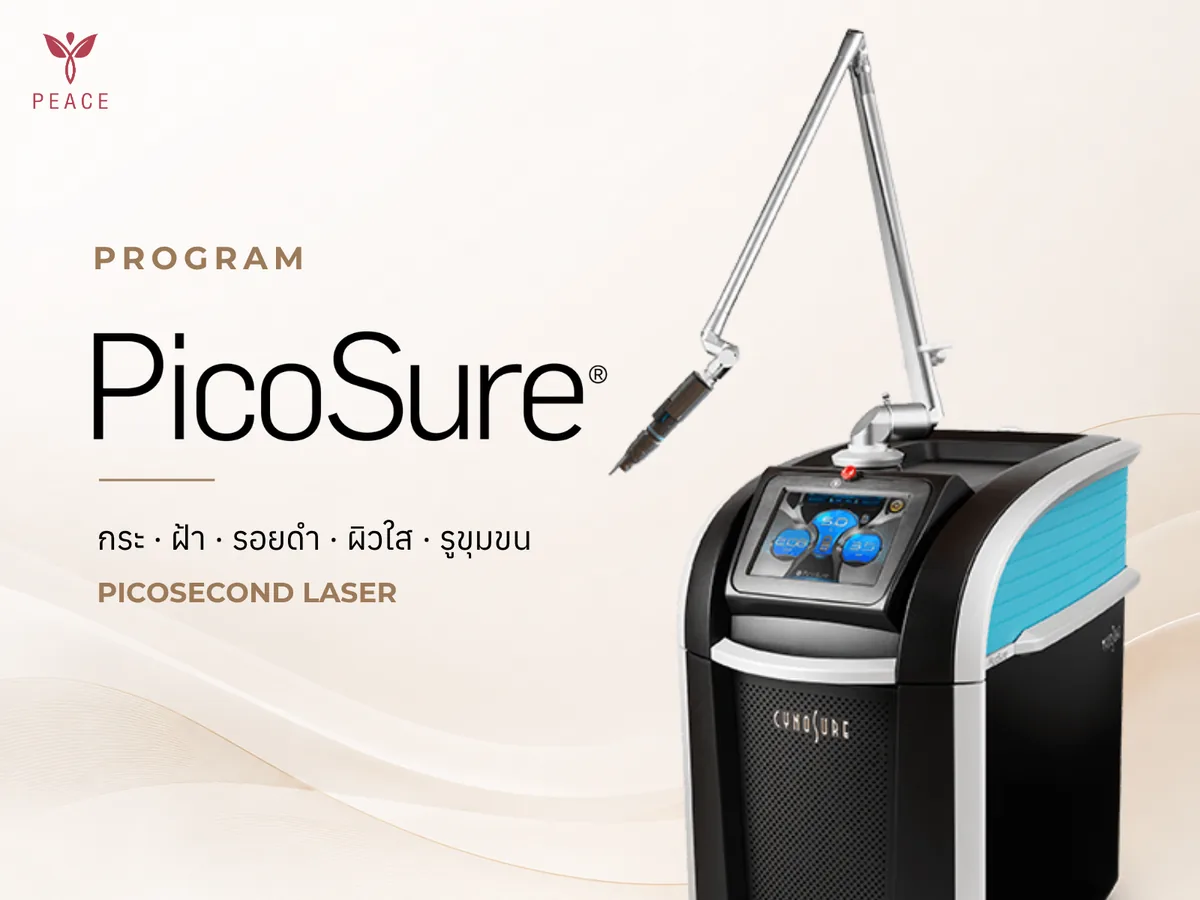
i.Device — the PicoSure picosecond laser (US FDA-cleared) shatters ink into fine particles the body clears away.
ii.What it removes — body tattoos, name/lettering tattoos, and cosmetic tattoos (brows, lips, eyeliner).
iii.Sessions — usually 6–12, spaced 6–8 weeks apart.
iv.Price — by size and location, quoted before starting. Send a photo for a free estimate on LINE.
What laser tattoo removal is
Laser tattoo removal delivers light energy to the ink beneath your skin, breaking the pigment into particles small enough for the body to clear naturally through the lymphatic system. The tattoo fades gradually, session by session — not all at once.
At Peace Clinic we remove tattoos with PicoSure, a true picosecond laser from Cynosure (USA), US FDA-cleared. Tattoo removal is the very use that first made this laser famous. Read about the device on the PicoSure page.
How it works — shatter, not burn
Older lasers rely mainly on heat, which is harder on the surrounding skin. PicoSure fires in picoseconds (trillionths of a second) — so fast it creates a mechanical shockwave (PressureWave) that shatters the ink into particles finer than heat-based lasers can.
Once the particles are small enough, your immune and lymphatic systems clear them over the following weeks. The tattoo keeps fading with each round, with less trauma and lower risk of dark marks on the surrounding skin.
Which ink colors are easy vs hard
Ink color strongly affects the number of sessions and the result — the doctor assesses your real colors first:
Ink color
Response
Black · dark blue
Best response — 755nm targets it well
Green · blue
Good — usually fades clearly over time
Red · orange
Moderate — may need additional wavelengths
Yellow · white
Hardest — fades slowly, sometimes not completely
Professional tattoos with dense, deep ink usually take more sessions than amateur tattoos with shallower ink.
Cosmetic tattoos: brows, lips, eyeliner
Beyond body tattoos, PicoSure can remove cosmetic tattoos that have discolored, turned green or red, or that you no longer want — including microbladed brows, lip blush and eyeliner tattoos.
Important caution: some cosmetic inks (white, flesh tone, rust brown) contain titanium/iron oxides that can temporarily darken from oxidation on the first laser pass. A small test spot is always done first, and treatment should be physician-performed to assess the ink type and plan safely.
How many sessions
The number depends on several factors, but is usually 6–12 sessions spaced 6–8 weeks apart so the skin and lymphatic system can recover and clear the shattered pigment:
Factor
Effect on sessions
Size & depth
Larger/deeper = more sessions
Ink color
Black/blue fewer; bright colors more
Professional vs amateur
Dense pro ink = more sessions
Location on body
Closer to heart/good circulation = faster
* Results vary by individual — some tattoos fade almost completely, others may leave a faint shadow. The doctor gives a realistic estimate before starting.
The procedure step by step
01The doctor assesses the tattoo — size, color, depth and ink type — and plans the number of sessions.
02Cleanse and apply numbing cream to reduce discomfort (where needed).
03PicoSure laser is passed over the tattoo — short, depending on size.
04Cool compress, ointment and a dressing as appropriate.
05Next session booked 6–8 weeks later so the shattered pigment can clear.
Pain & when you see results
Pain: it feels like quick rubber-band snaps on the skin; numbing cream helps a lot. Each session is short, scaled to tattoo size.
Results: the tattoo fades step by step, not in a single session. The first 1–2 weeks may show light scabbing and redness; once the skin heals and the body clears the pigment, the fading becomes clearly visible before the next round.
Longevity: pigment that has been cleared does not return, but the final result depends on ink type and color — some tattoos fade almost invisibly, others leave a faint shadow.
Side effects & who should wait
Temporary, expected effects: brief skin whitening (frosting) right after, mild redness and swelling, light scabbing and pinpoint bleeding that heal within 1–2 weeks. Do not pick the scabs.
Talk to the doctor first if you:
i.are pregnant or breastfeeding
ii.have an active infection, cold sore or wound in the area
iii.have a history of keloids or raised scarring
iv.have a fresh tan or sunburn within the past 2 weeks
v.take photosensitizing medication (tell the doctor)
vi.have a mole or birthmark within the tattoo — it must be checked first
Price in Mae Sot
Pricing is based on the size and location of the tattoo, per session or as a course. Because every tattoo is different, we always assess a real photo first, then quote the estimated number of sessions and a clear price before starting.
Send a photo of your tattoo (with something for scale, like a coin) to LINE @peaceclinicth for a free assessment and estimate
Aftercare
i.Keep the area clean and apply ointment as advised; don't let it dry and tighten.
ii.Do not pick or scratch scabs — let them fall off to reduce scarring risk.
iii.Avoid strong sun and use SPF50+ on the area until fully healed.
iv.Avoid swimming, hot baths, saunas and heavy friction at first.
v.If you have unusual swelling, pus or strong pain, contact the clinic.
Frequently asked questions
Usually 6–12 sessions spaced 6–8 weeks apart, depending on size, depth, age and ink colors. Professional tattoos with dense deep ink take more sessions than amateur ones.
Black, blue and green respond best; red and orange may need additional wavelengths; yellow and white fade slowly and, in some cases, not completely. The doctor assesses the real colors first.
Yes, but some cosmetic inks (white, flesh, rust) can temporarily darken from oxidation, so a small test spot is always done first and treatment is physician-performed.
It feels like quick rubber-band snaps. Numbing cream beforehand helps a lot. Each session is short, depending on tattoo size.
PicoSure shatters pigment by mechanical pressure more than heat, so scarring risk is low when performed by a physician with proper aftercare. Picking scabs or sun exposure increases the risk.
Priced by tattoo size and location, quoted before starting. Send a photo for a free assessment and estimate on LINE @peaceclinicth.